
產品
Recocell
|
3
+
electronic manufacturing industries Customized service for PCB, TFT-LCD, Semiconductor industry’s wastewater |
90
+
contract customers Number of BOO electronic manufacturers customers |
8+
service regions Service regions include in Taiwan, China, Vietnam, Malaysia, Japan…etc |
3000+
electrowinning system Largest scale and reliable electrowinning system operated in multiple electronic manufacturers |
Product Introduction
In the PCB, TFT-LCD, or semiconductor electronic manufacturing factory, wet processes such as electroplating, wet etching, or roughening are widely adopted for copper interconnect formation. Therefore, various types of copper-containing wastewater will be produced. Conventionally, chemical precipitation by adding wastewater treatment chemical, and forming copper sludge is the most extensively employed strategy for Cu wastewater treatment. However, a significant amount of copper sludge should be outsourced as hazardous waste, and the Cu ions within the wastewater can hardly be recycled.
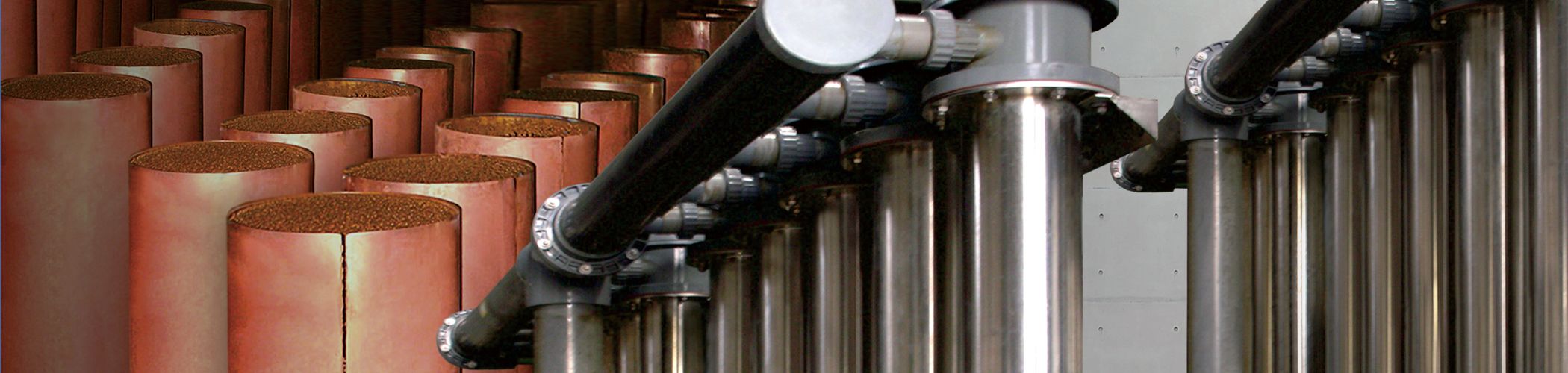
The Recocell® electrowinning system can effectively recover Cu metal (purity>99%) from various copper containing wastewater in the electronic manufacturers. The recovered product is metallic copper, and has no risk for environment since it has no pollutant disposal issue. Furthermore, it can easily be put into the supplier chain as raw material locally, and satisfy the target of circular economy. During the electrowinning process, there is no secondary waste produced during the process, and will not add the secondary pollution or burden owing to the refinery procedures.
The service team of Waste Recovery Technology can provide customized design based on the factory’s wastewater characteristics, and match with the existing wastewater treatment module to create the highest benefit. With multiple type of integrated module such as solvent extraction, ion-exchange tower… etc. We are able to provide the best solution for in-house Cu wastewater treatment.
Recocell® electrowinning system can also be applied in different type of metal such as nickel, cobalt…etc. We are able to treat electroless nickel, electroplating nickel/cobalt wastewater.
Waste Recovery Technology company’s Recocell® has following advantages:
- Tubular design, able to operate with high current density and high output.
- Centralized gas evacuation system, the electrowinning environment has no acidic gas issue.
- The current distribution and efficiency re high, very low hydrogen gas evolution side reaction.
- Separatable cathode design, and easy to withdraw copper by crane.
- Module design allow the possibility to add electrowinning cell depending on the factory’s demand.
- High automation control panel and complete safety monitor system.
Photo collection
{cwgallery}
Dimensionally Stable Anode
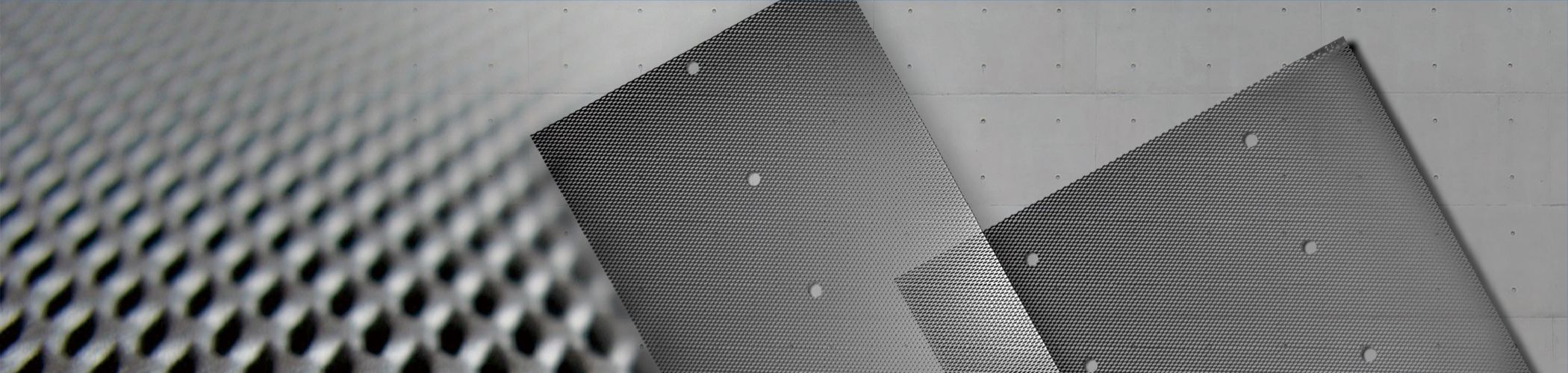
(Iridium oxide coated titanium anode)
|
200
+
Production line (line) More than 200 via-filling plating line in PCB industry |
30
+
Customer(number) More than 30 PCB users |
10
+
Equipment manufactures (number) Matching with more than 10 brands of electroplating equipment |
5
+
Additive company (number) Matching with more than 5 brands of electrolyte additive |
Product Introduction
Electroplating process is widely been used in electronic manufacturing process. In PCB or semiconductor, the copper interconnect is very important in building the designed circuit pattern. During the process, the PCB or wafer is placed as cathode, and metal will grow according to the desired pattern by electrodeposition. Accordingly, anode is necessary material to proceed the reaction.
Conventionally, in PCB or decorative plating industry, the batch-type electroplating machine was widely employed, and it normally equipped with the soluble phosphorous-doped Cu anode. However, as the miniature of copper interconnect and chasing for higher output, the continuous electroplating machine becomes the mainstream product in the industry. The continuous plating machine can be furthered divided into the horizontal type or vertical type machine. For better plating performance, the mixed-metal-oxide (MMO) based titanium insoluble anode gradually replaces the conventional soluble Cu anode, and the iridium/tantalum-based coating DSA is the most extensively employed type for oxygen evolution reaction.
| Anode comparison | Phosphorous doped Cu anode | Iridium oxide titanium anode |
|---|---|---|
| Anode reaction | Cu dissolution reaction | Oxygen evolution reaction |
| Solubility | Dissolute during discharge | Insoluble during discharge |
| Dimensional stability | Change dimension during discharge | Stable dimension during discharge |
| Unifomity of electric current distribution | Instable | Consistent |
| Maintenance | Need downtime to clean the copper sludge and black film | No special maintenance needed |
| Cu concentration in the electrolyte | Hard to monitor owing to the instable dissolution rate of Cu | Can be monitored and accordingly replenished by CuO |
| Current density | Lower than 0.5A /dm2 | Can be higher than 10 A/dm2 |
| Via filling ability | Instable | Consistent |
Owing its outstanding advantage, DSA has extensively been employed in the functional via-filling, through-hole filling, periodic-pulse reverse (PPR) copper electroplating process. Furthermore, to satisfy the unique and miniature via-filling process, copper sulfate electrolyte bath should be added with specialized organic additives to control the selective growth of Cu within the favorable region. However, since the organic additive normally contains thiol (-SH) functional group, it can easily be oxidized and degraded during the electroplating process.
Based on the advantage of DSA, DeNora develop unique MMO coating with the aim to control the organic additive consumption rate during the advanced via-filling process. Since 2002, based on the durable iridium oxide type coating, DeNora develop the first generation DT1 DSA, which can meet the demand for low additive consumption rate and long service life, and further launch the DT3 type DSA for better performance in 2006. Until now, the fifth generation DT5 anode already possesses very low organic additive consumption rate as the soluble phosphorus-doped Cu anode. We solve the intrinsic high oxidizing activity of DSA, and still keep the advantages of long service life and low maintenance burden, offering the best solution of via-filling process for PCB industry.
We represents DeNora company’s DT series DSA, and our product already has evidence in matching with various brands of organic additive supplier in PCB via-filling production such as JCU, MacDermid, DOW chemical, Schlotter, Atotech…etc. The DT series DSA has proven to successfully reduce the consumption rate of organic additives, and ameliorates the accumulation rate of inactive by-product, which effectively prolong the lifetime of copper sulfate bath.
We offer professional titanium manufacturing service for DSA, and is able to meet the demand for most electroplating equipment such as PAL, Atotech, Almex, AEL…etc. Based on the equipment’s design, we are able to offer highly customized titanium frame, hook, or conductive bar. Moreover, we offer various electrolytic bag or membrane for anode equipment, and provides comprehensive customized design based on customer’s demand.
Product advantages
- High discharging stability and uniformity
- Long service life
- Low organic additive consumption rate
- No need for consistent maintenance
- Excellent corrosion resistivity
- Complete service for titanium manufacturing
Solvent-Extraction System
Product Introduction
In the electronic manufacturing factory, the copper-containing wastewater have various characteristics owing to the purpose of manufacturing process, and it normally contained different type of organic substance or oxidizing agent. For instance, the super-roughening or brown oxide wastewater from PCB industry have very strong chelating agent, which cannot be recovered by direct electrowinning. In addition, during the electronic manufacturing process, cleaning process is very important. Therefore, water rinsing process always accompanied after etching process, and low Cu concentration wastewater will be produced. Owing to very large wastewater quantity and low Cu concentration, direct electrowinning is not applicable.
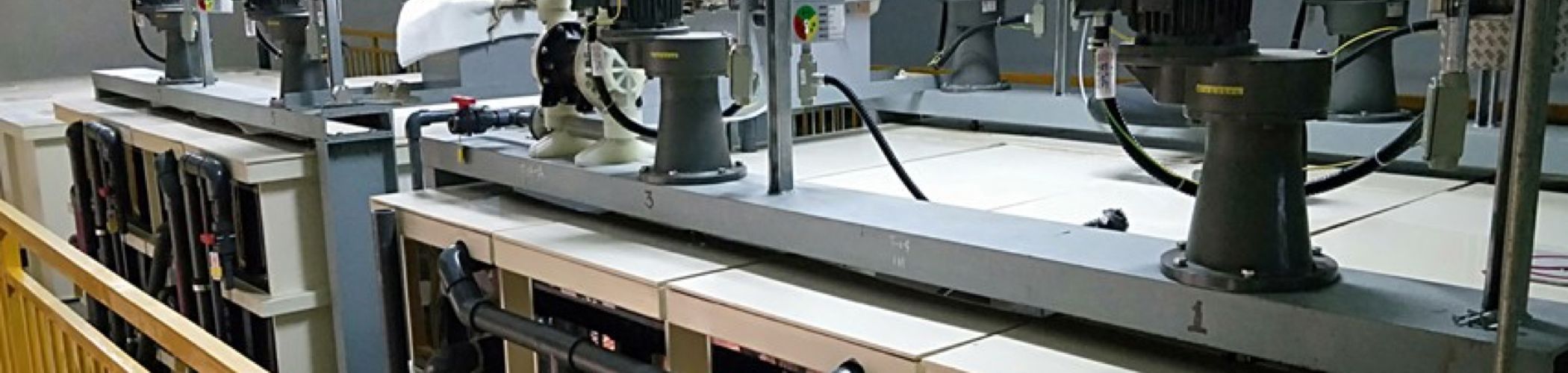
To treat various type of copper wastewater, Waste Recovery Technology develops the solvent extraction process. We utilize specific organic additive with strong chelating ability toward Cu ions, which can effectively separate the organic impurity in the wastewater, and transform the Cu ions inside the wastewater into pure sulfuric copper.
According to the demand of customer, Waste Recovery Technology can provide the solvent extraction plus Recocell electrowinning system. With appropriate process design, we can realize the possibility to recover all Cu ions inside the Cu wastewater into Cu metal, and completely give up the conventional precipitation treatment process, which saves the chemical addition cost and eliminates hazardous Cu sludge.
The solvent-extraction system provided by Waste Recovery Technology has following benefits:
- Able to treat Cu wastewater with strong chelating agent.
- Able to treat Cu wastewater with halogen group impurities such as chloride, fluoride or bromide.
- Able to treat Cu wastewater lower than 1000 ppm Cu concentration.
- Able to treat Cu wastewater with strong hydrogen peroxide or sodium persulfate oxidizing agent.
- Able to realize continuous operation.
- High automation electronic control system which can realize smooth integration into existing wastewater treatment module.
Acid-etching solution on-line electrowinning recovery system
Product Introduction
Acid-etching process is a common PCB manufacturing process for circuit formation, and copper chloride is normally the main chemical for the etching solution. Its principle is to utilize the oxidizing ability of Cu2+ ions, and etch the Cu metal on the copper clad laminate into the solution. During the etching reaction, the Cu2+ ions will transform into Cu+ ions, and exist as the CuCl2 formation, which does not possess the etching ability. Therefore, the solution should continuously add the oxidizing agent such as sodium chlorate, which can oxidize the Cu+ ions back to the Cu2+ ions, and maintain the activity of chemical.
When the copper concentration inside the solution is higher than 100 g/L, the etching rate will gradually slow down and losing its functionality owing to the saturation of copper, and it becomes the highly-concentrated Cu wastewater. The conventional way to recover the Cu metal is by adding sodium hydroxide, sulfuric acid, or sodium carbonate to permutate the Cu ions into solid formation, and transform it into Cu-related compound such as copper oxide, copper sulfate, or copper carbonate. However, such method requires huge amount of hydroxide, and the recovery rate of Cu metal is low. In addition, the high chloride ion contamination is inevitable, and the recovered Cu-related compound has risk of uncertain selling destination.
Based on the bottleneck of traditional method, Waste Recovery Technology develops the on-line electrowinning recovery system, and realizes the possibility to re-use the wastewater back to the production line.
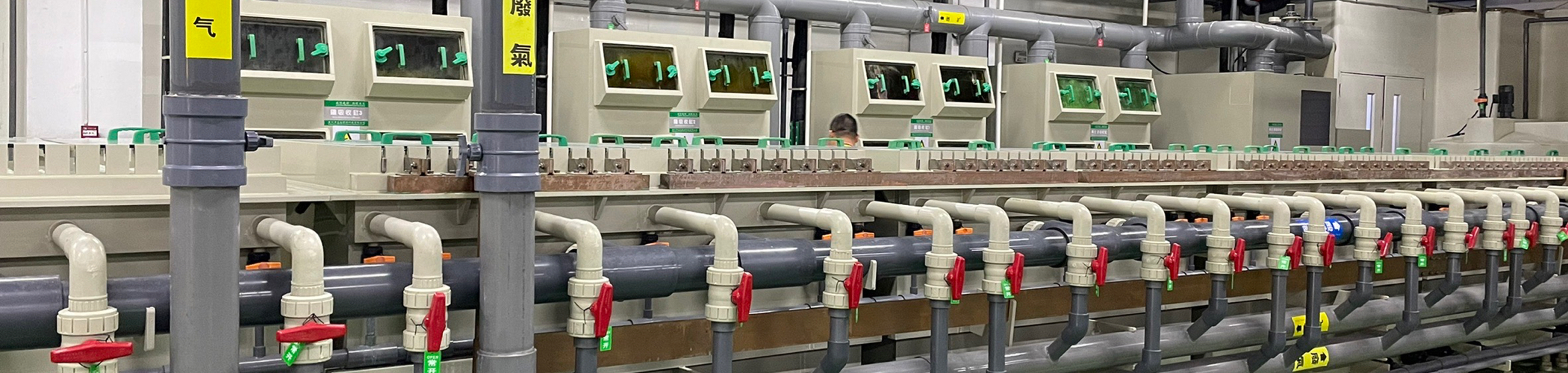
The acid-etching electrowinning recovery system adopts the membrane electrolysis principle. With the ion-selective membrane, the copper chloride wastewater is divided into the anode and cathode compartment. The Cu electrodeposition reaction is occurred in the cathode, and Cu metal with >99% purity is deposited. In the anode compartment, the chloride ion in the wastewater is electrolyzed, and chloride gas is generated. The Cl2 gas is conveyed to a customized adsorption chamber, and the chloride gas is mixed with the copper chloride solution. The Cl2 gas can oxidize the inactive Cu+ ions into Cu2+ ions, and enhance the solution etching activity. In the meantime, it successfully reduces the usage of oxidizing agent. For the residual Cl2 gas, it will pass through our customized iron adsorption system, and transforms into the FeCl3 solution, which can be further employed as the coagulation chemical for the wastewater treatment plant.
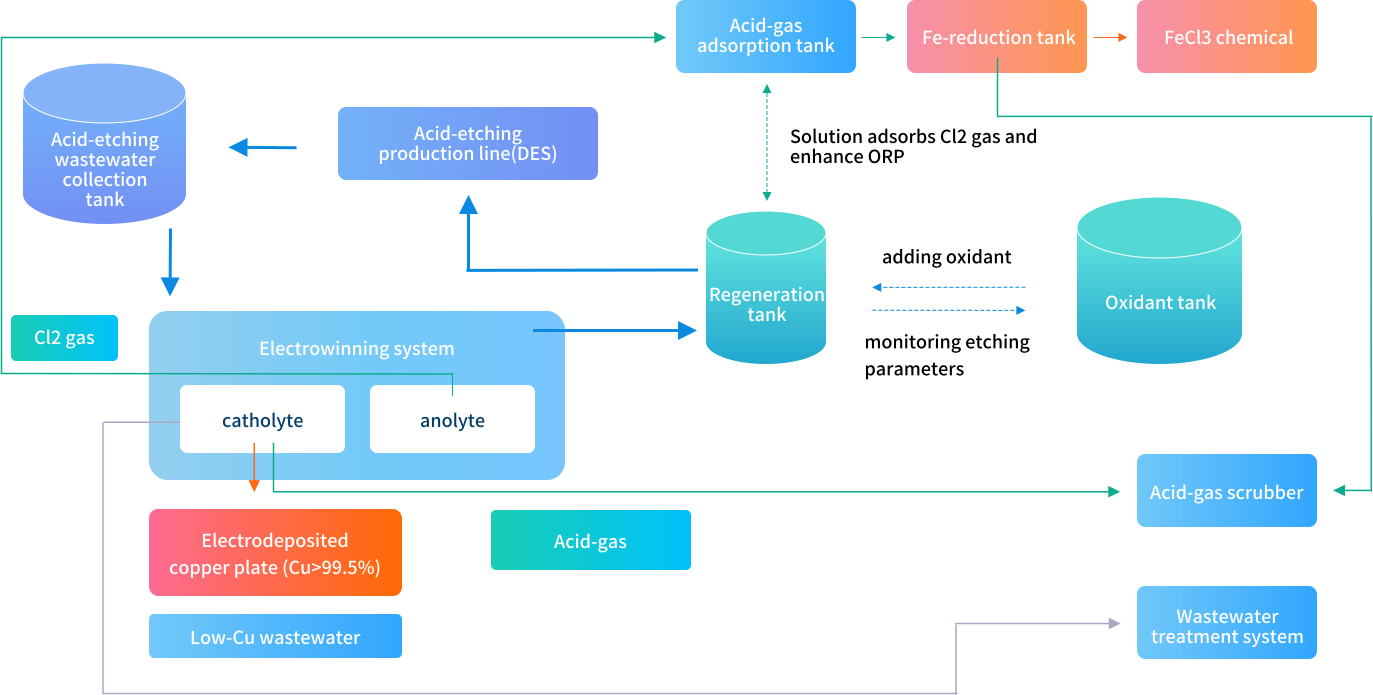
Waste Recovery Technology’s on-line electrowinning system has following advantages:
- Can recover the Cu ions in the copper chloride wastewater into metallic copper, not traditional Cu-related compound.
- Can re-use the solution back to the production line, and reduce the cost of buying oxidizing agent or HCl chemical.
- Waste Recovery Technology can offer stable etching solution for the production line.
- Compared to adding new etching chemical, the etching rate of our solution is more stable since the floatation of Cu concentration is lower.
- No need to add sodium hydroxide, which greatly reduce the cost.
Photo Collection
{cwgallery}